MLB Doubleheader Betting Rules: How UK Bookmakers Identify Game 1 and Game 2
 Available in US
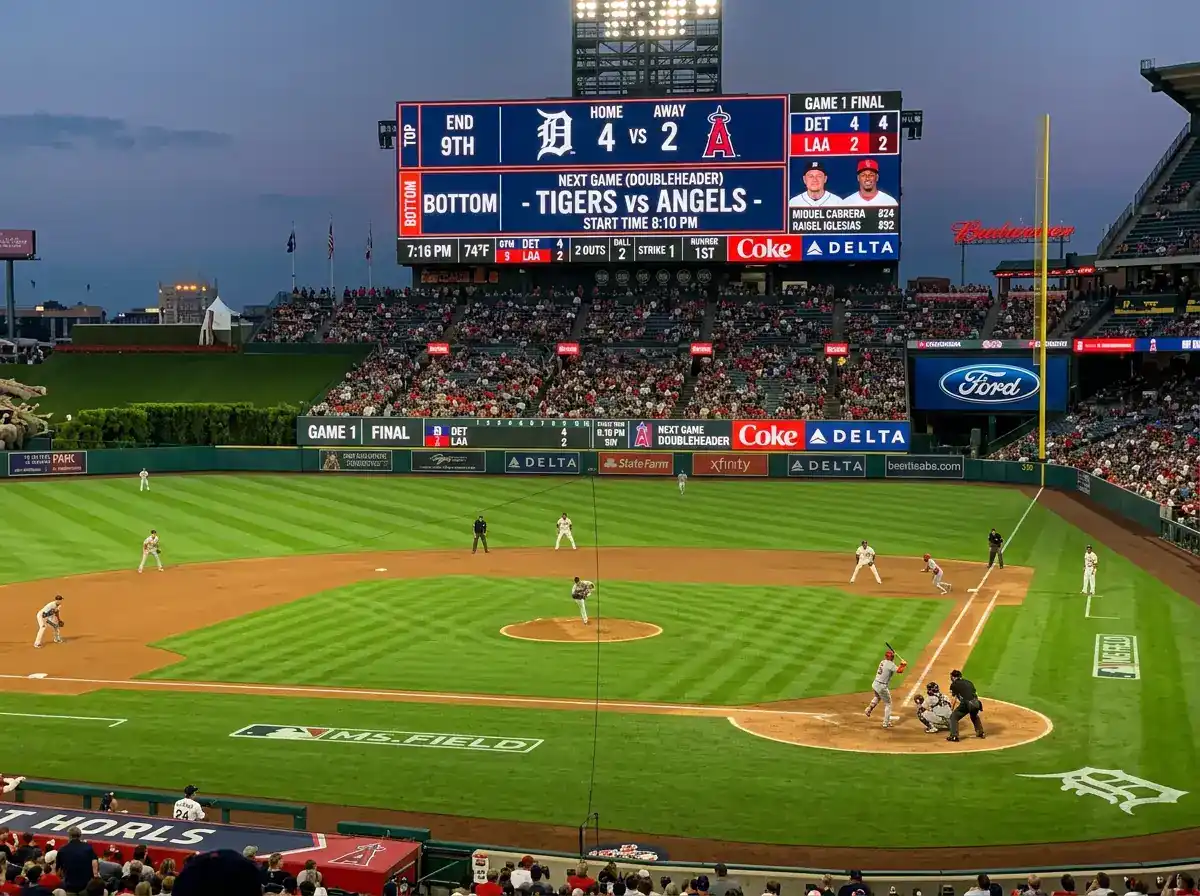
Doubleheaders are one of the most logistically awkward betting scenarios in MLB, and I say that from experience watching UK punters get their wagers mixed up more times than I can count. The core problem is this: two games, one day, one stadium, sometimes the same teams, and if you do not know which one you have bet on, you are in trouble. UK bookmakers have specific labelling conventions to handle this, but those conventions only work if you understand them.
Traditional vs Split Doubleheaders: What is the Difference
Not all doubleheaders are created equal, and the type affects both how games are scheduled and how betting markets are structured.
A traditional doubleheader, sometimes called a twin bill, happens when two teams play two games on the same day, back to back, with a short break between them. Fans buy one ticket and watch both. These used to be common; today they are almost always makeups for earlier postponements rather than scheduled events. Traditional doubleheaders use seven-inning games rather than the standard nine, which is an MLB rule introduced in 2020 that has remained in place. That seven-inning format has significant implications for betting that I will return to shortly.
A split doubleheader is different. Two games on the same day, but at different times, say 1pm and 7pm, with separate ticketing. Fans choose which game to attend. Split doubleheaders are rarer still and are typically the result of rescheduling around stadium events or broadcast requirements. For betting purposes, split doubleheaders are treated as two fully independent games and are listed separately in the market. The distinction between Game 1 and Game 2 labelling is just as important here, but the games otherwise behave as standard nine-inning contests.
Why does the type matter for your bet? Because a traditional doubleheader game has a seven-inning format, which directly affects the official game threshold. More on that in the void conditions section below.
How UK Bookmakers Label Game 1 and Game 2
The labelling system is the single most important practical thing to understand about doubleheader betting. Every UK operator I have reviewed uses the same basic approach: Game 1 is the earlier game (lower number), Game 2 is the later game, and both are listed separately in the schedule with a “(1)” or “(2)” suffix next to the team names.
Where it gets complicated is the announced versus actual start time. A traditional doubleheader might be announced as Game 1 at 1:05pm and Game 2 starting approximately 30 minutes after Game 1 ends, so Game 2 has no fixed start time when you place your bet. If the operator’s platform lists “Yankees vs Red Sox (2)” without a confirmed start time, you know you are looking at the second game even if you cannot see the exact time it will begin.
The risk point is when a doubleheader is announced after you have already placed a bet on what you thought was a single afternoon game. Say you backed Team A for their Monday afternoon game before a doubleheader was announced. Your bet was placed on “Monday’s game”, but now Monday has two games. Most UK operators handle this by defaulting your pre-existing bet to Game 1 (the earlier game), on the basis that your bet was placed before the second game was scheduled. If the subsequent game changes the team lineups or pitching assignments, that is an action-betting consideration but not a void trigger.
Sky Bet, Betfair, and bet365 all publish specific language about doubleheader labelling in their baseball rules sections. The key thing is to verify your bet confirmation shows the correct game number when you are playing a doubleheader day.
Void and Postponement Rules in Doubleheaders
Seven-inning games change the official game threshold meaningfully. For a standard nine-inning game, the official game rule in baseball requires 4.5 innings (or five full innings) for a result to stand. For a seven-inning doubleheader game, that threshold is typically applied proportionally, and UK bookmakers generally require a minimum of 4.5 innings for a seven-inning doubleheader game to settle rather than void. Some operators apply 3.5 innings for seven-inning games as the threshold. This is not uniform across operators, and it is worth confirming before placing.
If Game 1 of a doubleheader is rained out after four innings of a seven-inning format, your bet may void depending on your operator’s specific threshold for that game type. If Game 1 finishes normally and Game 2 is then rained out after two innings, Game 2 bets almost certainly void — two innings is well below any reasonable official game threshold.
Postponement of one game within a doubleheader is an unusual scenario but not impossible. If a doubleheader is announced and then Game 2 is postponed before it begins — perhaps the first game runs very long and there is insufficient daylight — your Game 2 bets are voided and stakes returned. Game 1 bets are unaffected. The two games are treated as independent wagers for void and postponement purposes even though they share a date.
For detailed coverage of how void rules work across all MLB bet types — including what happens to accumulator legs when a doubleheader game voids — the complete MLB void rules guide for UK bettors has the full picture.
Doubleheader FAQs
If only one game of a doubleheader is played, what happens to my bet on the postponed game?
The bet on the postponed game is voided and your stake is returned. The two games are independent wagers — the result of Game 1 has no bearing on the settlement of Game 2 bets. If Game 2 is postponed before it begins, stakes are returned. If Game 2 starts but is then suspended before meeting that threshold, the same void applies.
How do I know which game is ‘Game 1’ when placing a doubleheader bet on a UK site?
UK bookmakers label doubleheader games with a (1) or (2) suffix next to the team names, typically visible in the fixture listing and on your bet slip. Game 1 is the earlier game. If times are listed, check the start time — the lower time is Game 1. If you are placing a bet before official times are confirmed, look for the game number suffix. If neither game has a confirmed time yet, contact your operator’s support to clarify before placing.
Do seven-inning doubleheader games affect the official game threshold for betting?
Yes. Traditional doubleheader games use a seven-inning format in MLB, which means the game is shorter by design. Most UK bookmakers apply a proportionally lower official game threshold for seven-inning games — often 4.5 innings rather than the five required for nine-inning games, though some operators use 3.5 innings. This matters because a rain-shortened seven-inning game can reach the threshold earlier than you might expect from a standard game. Always check your operator’s specific rules on seven-inning game settlement.
Created by the ”mlb Betting Rules” editorial team.