MLB Park Factors and Weather Betting: How Venue and Conditions Affect UK Wagers
 Available in US
The first time I looked seriously at MLB venue data, I was trying to understand why my totals bets were going wildly wrong for a three-week stretch despite reasonably good pitcher analysis. The culprit turned out to be a scheduling cluster that had me consistently betting unders on games in hitter-friendly parks without accounting for the fact that the run-expectancy baseline was 15-20% higher than the league average. Park factors are one of the most underused pieces of information available to UK MLB bettors, and weather is the dynamic variable that can flip a confident over into a confident under on the morning of the game.
What Park Factors Actually Mean
A park factor is a numerical measure of how a specific ballpark affects run scoring relative to the league average. A park factor of 100 is neutral, exactly league-average run production. A factor of 115 means roughly 15% more runs score in that park than the average MLB venue. A factor of 87 means 13% fewer.
Coors Field in Denver is the canonical extreme example. The altitude, roughly 1,600 metres above sea level, reduces air density enough that fly balls carry significantly further and breaking pitches break less sharply. Coors has consistently posted park factors above 115 for decades, often reaching 120-125 in above-average years. A game there is simply a different scoring environment than a game at Petco Park in San Diego, which consistently ranks among the most pitcher-friendly venues in the league.
Park factors are not just about fence distances, though dimensions matter. Surface type affects how balls travel through the infield. Foul territory affects how many outs catchers and first basemen can record on pop-ups. Roof configuration determines wind exposure. And altitude determines air density, which affects both pitch movement and ball carry. The result is that two parks with similar fence distances can have meaningfully different run environments once all the contextual factors are combined.
For UK bettors, the practical application is straightforward: before setting a view on an over/under total, check the park factor for the venue. A run total of 8.5 in a park with a factor of 110 represents a different proposition than 8.5 in a neutral park. The bookmaker’s oddsmaker already knows this and has incorporated it, but knowing the park factor yourself tells you whether the total has been set at a level that genuinely reflects the venue’s run environment.
The Parks That Matter Most for Totals Betting
Most experienced MLB bettors have a mental shortlist of venues that consistently skew run expectations in one direction. I keep mine active during any week where I am focusing on totals markets.
At the hitter-friendly end: Coors Field in Colorado is the outlier everyone knows, but Great American Ball Park in Cincinnati and Globe Life Field in Texas also routinely post factors above 108. American Family Field in Milwaukee has trended upward in recent years. These are venues where the under requires a particularly compelling pitcher case to be worth backing, the base expectation for run scoring is elevated enough that under bets need a meaningful edge to overcome.
At the pitcher-friendly end: Petco Park in San Diego, Oracle Park in San Francisco, T-Mobile Park in Seattle, and Tropicana Field (now playing in a temporary capacity) have all historically suppressed run scoring. In these environments, over bets face headwinds even against mediocre pitching matchups, the parks themselves work against scoring in ways that are independent of who is on the mound.
The parks in the middle, roughly factors between 95 and 105, can go either way and are less important as a systematic input. Where park factor really matters is at the extremes, and even casual awareness of which venues sit at those extremes gives UK bettors a useful filter before they look at individual game prices.
Weather as a Dynamic Modifier
Park factors are stable over multiple seasons, but weather is a same-day variable, and it can be the most important factor of all in certain game contexts. Wind direction and speed at outdoor parks directly affects both totals and moneyline betting in ways that are systematically underpriced in early markets.
Wind blowing out to center field at 20+ mph (roughly 32 km/h) is the most reliably bullish weather signal for over bets in MLB. Fly balls that would normally die at the warning track carry into the stands. Broken-bat bloops turn into doubles when they reach the gap with extra carry. The effect is most pronounced at parks with shorter power alleys — Wrigley Field in Chicago is the famous example, where blowing-out conditions can shift the expected run total by a full run or more compared to calm conditions at the same venue.
Wind blowing in from centre field has the opposite effect. High infield wind also suppresses scoring, partly by affecting fly ball carry and partly by affecting pitcher grip and release consistency. Cold temperatures, below 10 degrees Celsius, roughly 50 Fahrenheit, reduce ball carry measurably, especially in early-season games in northern markets like Chicago, Boston, Cleveland, and Minneapolis.
The best time to check weather for MLB betting is the morning of the game. Most reliable weather services update their wind forecasts through the day, and the 3-7pm ET window (when most games start) is close enough for same-day forecasts to be reasonably accurate. I use hourly wind data for any outdoor game where the current forecast shows sustained wind above 15 mph — below that threshold, the effect is small enough that it rarely moves my view meaningfully.
Rain Delays and Postponement Risk for UK Bettors
Weather affects bets in a second way beyond scoring: through the risk of rain delays and postponements. For UK bettors, understanding how your bookmaker handles incomplete games under weather conditions is essential before placing a bet on an outdoor game with any rain in the forecast.
The standard rule at UK operators is that bets stand if a game becomes official — reaching 4.5 innings (or 5 full innings if the home team is leading) — and are void if the game does not reach that threshold. A game that is called after three innings with no official result voids all pre-game bets at most operators. A game that reaches the official game threshold and is then called early settles on the score at the time it was officially ended.
This creates an asymmetric risk for bettors who have placed under bets on games with rain in the forecast. If you back the under on 8.5 total runs and the game is called after 5.0 innings with 3 runs scored, your under bet wins — the game is official and the final score stands. But if the game is called after 4.0 innings, your bet voids and you get your stake back regardless of the score.
My standing practice: check the rain forecast for any outdoor game before betting, and if there is genuine postponement risk (50%+ chance of significant rain in the window before the game reaches official status), I either avoid the bet or take a position only on markets that are less affected by void risk — typically futures or next-day games where scheduling is more secure.
Domed Stadiums and Weather Neutrality
Eight MLB parks currently use roof systems that fully or partially eliminate weather as a variable: Miami, Houston, Seattle (retractable), Milwaukee (retractable), Arizona (retractable), and Toronto among the fully enclosed options. When games are played under a closed roof, wind and precipitation become irrelevant to your betting analysis — you can focus purely on pitcher quality, lineup depth, and park dimensions without any weather modifier.
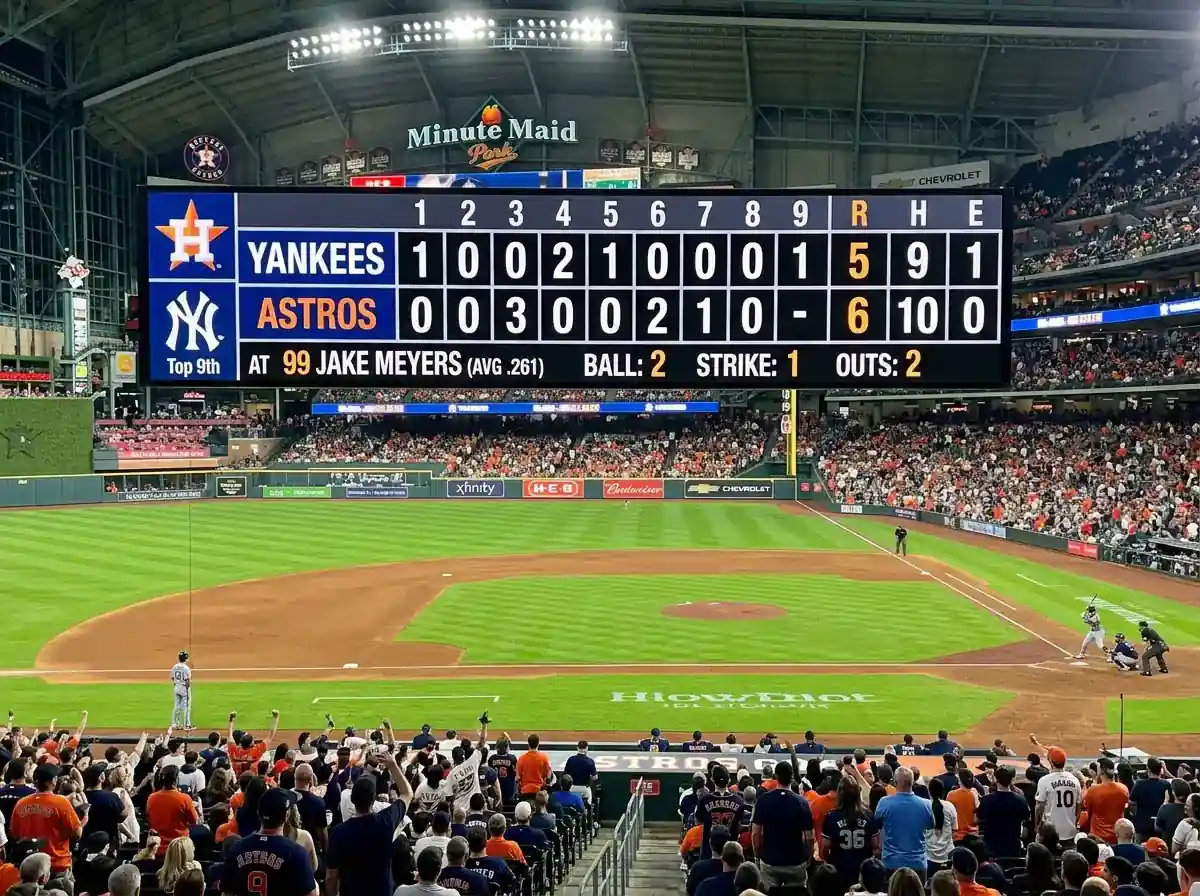
This is actually a useful simplification. Dome games are, in my experience, easier to handicap for totals because the variable set is smaller. The tradeoff is that some of these parks have their own quirks — the Astros’ Minute Maid Park has a famously unpredictable catwalk that affects play, and the artificial turf in some domed parks affects how ground balls travel — but these are consistent, knowable factors rather than dynamic ones.
Retractable-roof parks add a layer of complexity because roof decisions are made on the day based on conditions. In Phoenix, the roof is frequently open for night games in moderate temperatures but closed when temperatures exceed 35 degrees Celsius or when rain is in the forecast. Knowing the roof policy for a specific park and checking same-day weather is important before betting totals in any retractable-roof environment.
Combining Park and Weather Data With Pitcher Information
None of these factors works in isolation. A great pitching matchup in a hitter-friendly park with blowing-out wind presents a genuinely mixed signal — the pitcher quality points toward the under, the venue and weather point toward the over. My approach when the signals conflict is to default to the pitcher matchup as the primary factor and treat the environmental inputs as modifiers that shift my confidence level rather than determinative signals in themselves.
Where park and weather data is most powerful is in providing context for a line that looks puzzling at first glance. When I see a total of 9.5 that seems high for the pitching matchup, checking whether the game is at Coors Field with an outblowing wind forecast usually explains it immediately. The line is not wrong — it is incorporating information that my initial pitcher-only analysis missed. Developing the habit of checking venue and weather before evaluating whether a total line is fair prevents a lot of the “why is this line so high/low” confusion that trips up bettors who focus only on the matchup.
For the rules around what happens to your bet when weather causes a game to be shortened or postponed, the complete guide to MLB rain delay betting rules covers every scenario in detail.
How much does wind typically affect MLB run totals and over/under lines?
Wind has a measurable and fairly consistent effect on scoring in outdoor parks. Sustained wind blowing out to centre field at 20+ mph can increase expected run scoring by 10-15% compared to calm conditions, which typically translates to the line being set half a run to a full run higher than it would be in neutral conditions. Wind blowing in has a roughly symmetrical suppressive effect. Below 10 mph, wind effects are small enough that most oddsmakers treat them as noise rather than a meaningful input. The effect is largest at parks with shorter power alleys and smaller foul territory.
Where can UK bettors check park factors for MLB venues?
Park factors are published by several baseball analytics sites and updated annually. The multi-year averages (3-5 year rolling park factors) are more reliable than single-season figures, which can swing based on a single year’s unusual roster or weather patterns. The key figures to know going into any betting session are which parks sit at the extremes — consistently above 110 or below 92 — since these have the largest systematic effect on totals markets. You do not need to memorise precise figures for all 30 parks; knowing the 5-6 outliers in each direction covers the vast majority of situations where the venue effect is material.
Does a game played in a domed stadium with the roof closed still have a park factor?
Yes. Domed stadiums have park factors that reflect their physical dimensions, playing surface, and altitude, even though weather is neutralised. Tropicana Field (historically) had a significantly below-average park factor for reasons unrelated to weather — artificial turf affecting ground ball speed and the relatively large foul territory giving defenders more outs on pop-ups. The Astros’ Minute Maid Park has a park factor above 100 partly due to its dimensions. Removing weather as a variable simplifies analysis but does not eliminate venue effects entirely.
Published by the mlb Betting Rules team.